Loves Learning at Home, Yet Dreads the School Bus. Why?

Loves Learning at Home, Yet Dreads the School Bus. Why?

Your child makes puzzles, asks hundreds of questions and remembers all the tales you read. But the school bag is out again and the tummy grumbles and the tears roll down. Parents often feel confused, as a child who loves learning should enjoy his/her school as well. This puzzle is very common among the first-time visitors to a primary school in Indore and is often easily solvable.

A few tips on how parents can help with the morning

Use open questions when dropping and picking people up, e.g. “What was the best part of today?” or “Who did you sit with?” Make mornings less hectic and allow your child to bring one small familiar object. When home and school routines are aligned, it is easier for the children to settle into the pre primary school in Indore, as the day is predictable.

What To Look for In a School Environment

Teachers’ warmth; small activity groups and time to play are as important as academics. While looking for the best preschools in Indore, many parents have started visiting during the lesson time to witness the teacher’s approach towards children and their handling of tears rather than reading brochures.

Resistance typically diminishes when a child feels safe, seen and understood. Discuss with the class teacher what you observe at home and wait 2-3 weeks. A caring nursery school in Indore can help instill this sense of curiosity and a welcoming best primary school in Indore can carry on this sense of comfort for your child as they grow.

FAQs

Q: Why does my child love learning but cry before school?
Usually the fear is about the setting, not the lessons. Separation, noise or social worry is common, and a primary school in Indore with caring teachers can help ease it.

Q: Is it normal for a child to refuse school after enjoying it earlier?
Yes. Illness, holidays, a new teacher or a friendship issue can bring it on. A pre primary school in Indore will usually work with parents to understand the cause.

Q: How long does school reluctance last?
It varies. Many children settle within a few weeks once routines stay steady. If it continues, speak with the teacher about what is happening in class.

Q: What should I look for if my child is anxious about school?
Look for gentle teachers, small groups and play-based activities. Parents exploring the best preschools in Indore often ask how teachers support children who struggle at drop-off.

Q: Can a nursery school help a child who is shy or hesitant?
Yes. A nursery school in Indore with a warm routine builds confidence gradually, and a top preschool in Indore often introduces group activities step by step so children never feel pushed.
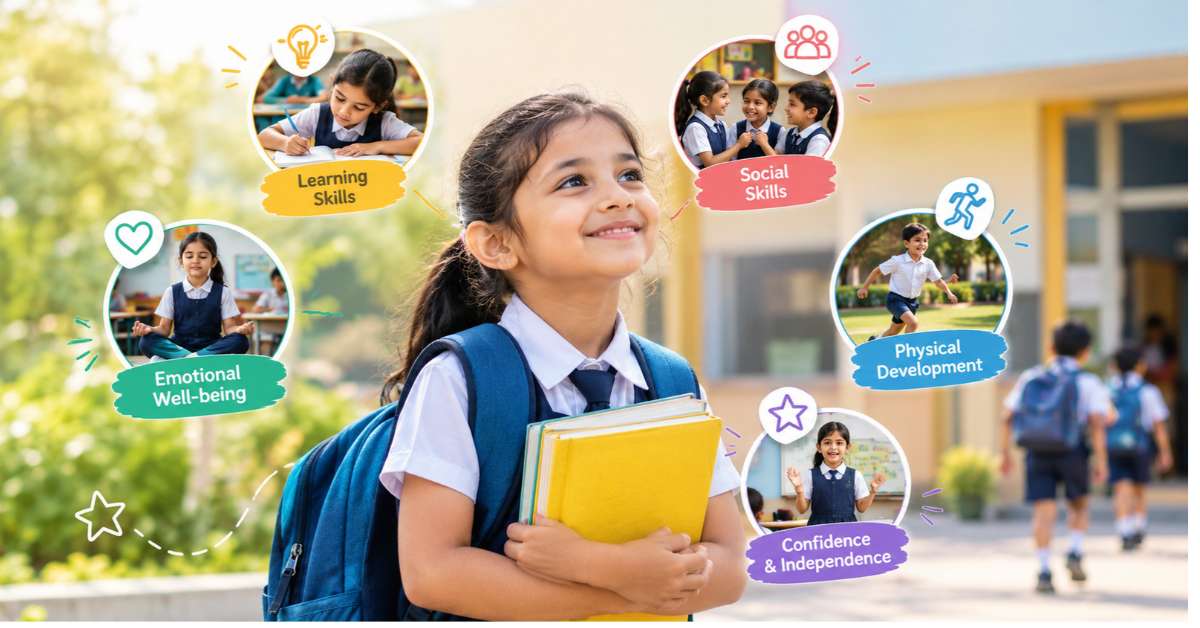
What Does Your Child’s School Day Say About Their Growth?

From greetings and play time to snack time and story time, a child’s daily activities influence his or her actions, words and emotions. A family’s visit to a primary school in Indore often reveals more about how a child has developed than a report card will. 

Some aspects of everyday life can teach you a lot 

Be alert for these signs of your child’s day: 

  • Arrival: Ease in separation and teachers’ greeting 
  • Circle time: whether they listen, speak or stay quiet 
  • Snack time: independence in the lunch box and manners. 
  • Play time: sharing, turn-taking and dealing with minor conflicts 
  • Departure: how they get bac\k into a group; 

Talking to a teacher at a pre primary school in Indore often is one of the first things teachers notice and it is often long before parents do. 

Questions To Ask About a School’s Schedule 

Discuss how long children sit, how much free play they have and how teachers respond to emotions and conflicts. So, if you are looking for the best nursery school in Indore, you should take into account the ratio of learning, resting, and moving. For families that require longer hours, they may also check out the best daycare in Indore and cbse school. 

Progress is seen in a child’s routine as he makes new friendships, holds his focus for longer and becomes more independent. A best primary school in Indore helps to establish steady routines and a top cbse nursery school in Indore creates daily learning habits for the future. 


FAQs  

Q: How can I tell if my child is growing well at school?
Look at routine behaviour: settling in easily, making friends, following simple instructions and talking about their day. A primary school in Indore with regular parent-teacher updates makes this easier to track. 

Q: What should a good daily routine include for young children?
A balance of structured activity, free play, rest, snacks and stories. A pre primary school in Indore usually plans these in short blocks to suit young attention spans. 

Q: Why does my child act differently at home and at school?
Children often hold it together in class and release emotions at home. This is common and usually settles as routines become familiar. 

Q: What routines should I check when choosing a nursery?
Ask how long children sit, how play is handled and how teachers support shy children. Parents shortlisting a top nursery school in Indore often ask to observe a short session. 

Q: Does school routine matter if my child also goes to daycare?
Yes, consistent timings for meals, rest and play across both help children feel secure. Many parents compare a best daycare in Indore with a cbse school in Indore to keep the day predictable. 


Is Your Child Memorizing Answers or Actually Understanding Them?

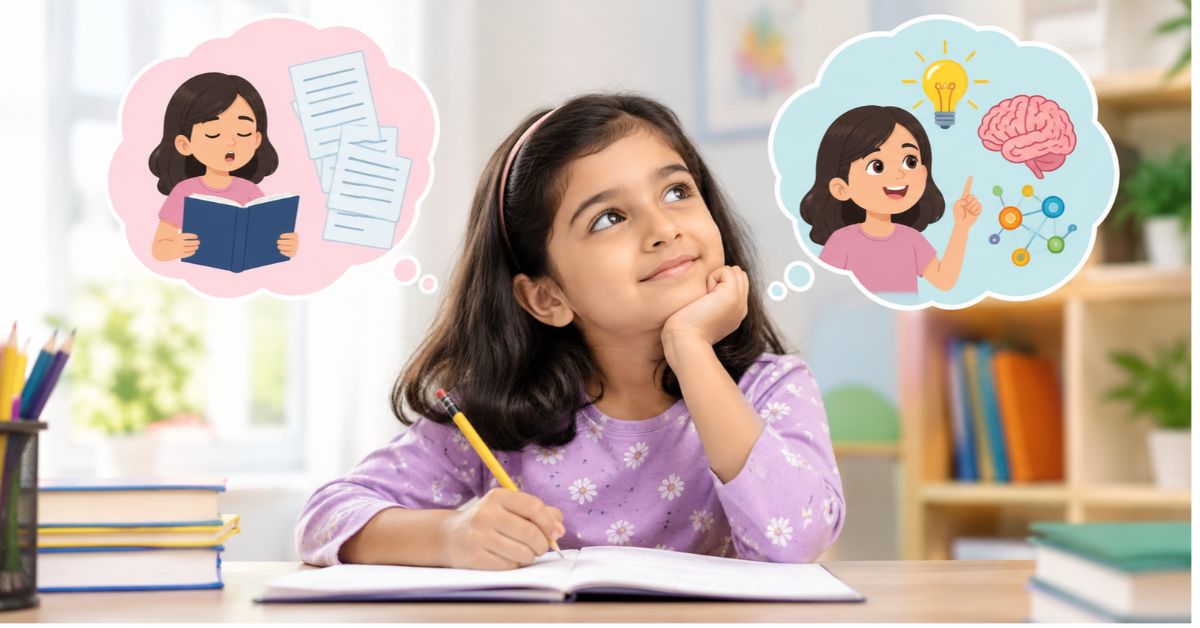
While it may be nice to get 100% correct answers, a child might be misled if the question is formulated in a different way. This is a contrast between memorization and understanding and confuses parents whether a CBSE School in Indore fosters thinking skills or simply memorization? 

The Real Stuff of Understanding 

Project based learning activities, experimentation and open-ended questions encourage children to think beyond the memorized answer. The best primary school in Indore which focuses on this aspect empowers students to ask questions such as “why” and “how” instead of “what is the solution? 

Things to look for when observing a classroom 

  • Teachers using open-ended questioning rather than fact checking. 
  • Children are encouraged to give reasons, rather than just stating conclusions. 
  • Regular and regular use of real-life examples in context, to lessons. 
  • Use of the Library that extends beyond the text books. 

What Parents Should Actually Compare Between Schools 

Class discussions, so-called “projects of learning” displays and teacher/child interactions reveal a difference between a primary school that is a real learning school and another school which focuses on glossy brochures and often advertised learning program names. 


When a child can repeat the answer back in exact match to the question but cannot use it when asked to use it elsewhere it does not always indicate that the child knows the concept, and it is only a passing memory. The CBSE School in Indore which will take utmost focus on understanding the child rather than memorization would be a good one. 


FAQs

  1. How can I tell if my child is memorizing or actually understanding lessons?
    Ask them to explain a concept in their own words or apply it slightly differently. A CBSE School in Indore focused on genuine learning encourages this kind of flexible thinking.
  2. What classroom activities actually support real understanding over memorization?
    Project-based learning, open-ended questions, and real-world examples help, something a best primary school in Indore typically incorporates regularly.
  3. Should I be concerned if my child scores well but struggles with slightly different questions?
    Yes, this often indicates memorization rather than genuine understanding, worth discussing with teachers at a primary school in Indore focused on deeper learning.
  4. What should I observe when comparing schools for genuine learning quality?
    Look at classroom discussion style, project displays, and how teachers encourage reasoning rather than just correct answers during lessons.
  5. Does reading beyond textbooks actually help with genuine understanding?
    Yes, significantly, broader reading habits help children connect concepts more meaningfully, something worth encouraging alongside structured classroom learning.